
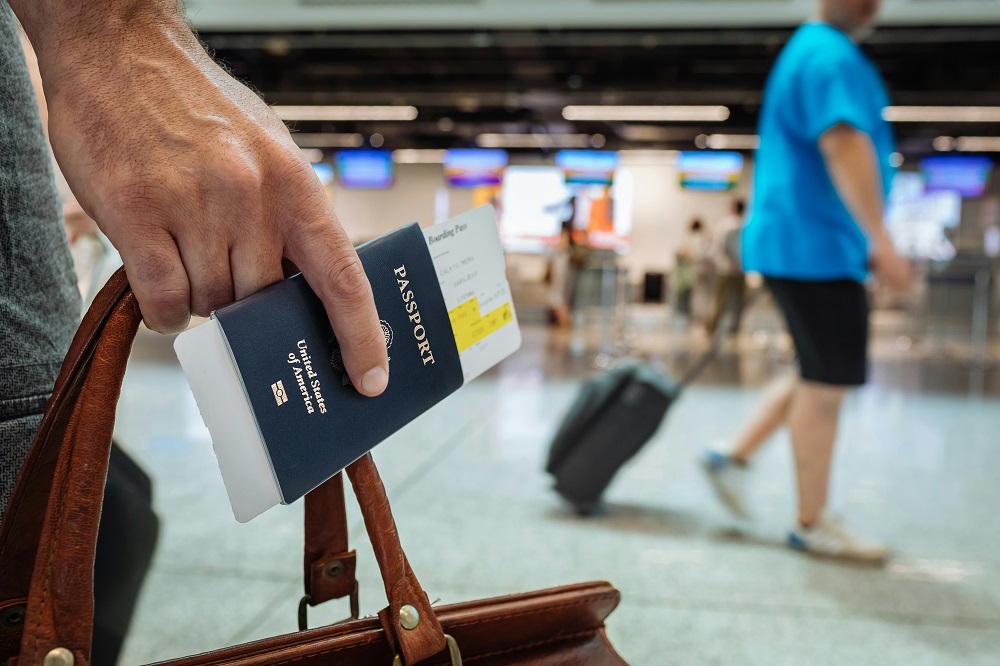
If you are planning a holiday to Tenerife in 2026 or 2027 and you have seen news stories about new EU border rules, fingerprint scans, and something called EES, you are not alone in wanting a clear explanation. The headlines have been confusing, the government guidance is buried in lengthy documents, and most of what is out there is written for a general European travel audience rather than someone specifically heading to the south of Tenerife.
This guide explains exactly what has changed, what happens when you arrive at Tenerife South Airport, what you need to do before you travel, and where things stand with ETIAS. The honest summary is that the changes are real but manageable, and understanding them in advance removes any anxiety about what to expect when you land.
This article was updated in October 2026 after the planned ETIAS launch date was dropped and following a summer of EES queues at Spanish airports. The situation continues to evolve. Always check the UK government’s Spain travel advice at gov.uk/foreign-travel-advice/spain before you travel for the most current guidance.
Contents
- What is the EES and Why Does it Affect My Tenerife Holiday?
- What Actually Happens at Tenerife South Airport Now?
- Your First Visit After EES: Step by Step
- What About Return Visits?
- What About Children?
- Will There Be Delays at Tenerife South Airport?
- The Travel to Europe App: Does It Work for Tenerife?
- The 90-Day Rule: What You Need to Know
- What is ETIAS and When Does it Start?
- How Much Does ETIAS Cost and How Do You Apply?
- EES vs ETIAS: What is the Difference?
- Practical Tips for Travelling to Tenerife in 2026 and 2027
- Frequently Asked Questions
What is the EES and Why Does it Affect My Tenerife Holiday?
EES stands for Entry/Exit System. It is a new EU-wide digital border system that records when non-EU citizens, including British passport holders, enter and leave the Schengen Area. It began a phased rollout in October 2025 and became fully operational on 10 April 2026.
Before EES, border officers stamped your passport manually when you arrived in and departed from EU countries. EES replaces those stamps with a digital record. The system stores your passport details, a photograph of your face, and your fingerprints in a shared EU database. Every time you cross an EU border, your entry or exit is recorded automatically.
Tenerife is part of Spain, which is part of the Schengen Area. This means EES applies when you fly into Tenerife South Airport and when you fly home. It affects all British passport holders regardless of how many times you have visited Tenerife before. Spain has kept EES running at its airports throughout 2026 and has not switched the checks off, even during the summer peak.
EES is not a visa. It is not a fee. It is not something you need to apply for in advance. It is simply a digital border registration process that happens at the airport when you arrive. Most people who understand what to expect find it entirely straightforward in practice.
What Actually Happens at Tenerife South Airport Now?
When you land at Tenerife South Airport (TFS) and head to passport control, the process now works differently from what you may have experienced on previous visits. For a full overview of what to expect at the airport, including transport and facilities, see our guide to Tenerife South Airport.
British passport holders must use the Non-EU queue. Look for signs saying Non-EU, All Passports, or Third Country Nationals. Do not join the EU/EEA queue. Using the wrong lane with a British passport will result in being redirected, which wastes time.
At passport control, your passport will be scanned. If it is your first visit since EES went live, you will be directed to complete a brief registration process. This involves having your photograph taken and your fingerprints scanned at a kiosk or manned booth. The registration itself takes around one to two minutes per person once you reach the front of the queue.
A border officer may ask a few standard questions about the purpose of your visit, and the UK government advises that you may be asked to show a return ticket, proof of travel insurance, your accommodation booking, and that you have enough money for your stay. Have your hotel confirmation and return flight details on your phone and you are covered. Once registration is complete, you are through and your holiday begins. Your EES record is valid for three years, making future visits quicker.
Your First Visit After EES: Step by Step
Arrive at Tenerife South Airport and follow signs to passport control.
Join the non-EU queue. Look for signs saying Non-EU, All Passports, or Third Country Nationals.
Your passport will be scanned at a kiosk or handed to a border officer at a manned booth.
You will be asked to have your photograph taken (facial scan) and your fingerprints recorded. Takes around one to two minutes.
You may be asked brief questions about the purpose of your visit, or to show your return ticket and accommodation booking. For a tourist holiday, there is nothing complicated about this. Answer honestly and straightforwardly.
Your entry is recorded digitally and you proceed through to the arrivals hall. No stamp is placed in your passport.
The same process applies when you leave. At departure, your exit is recorded through the same system. Allow additional time at Tenerife South Airport before your return flight.
What About Return Visits?
Once you have completed your first EES registration, subsequent visits within the three-year validity period of your record are considerably quicker. Your passport is scanned and your biometric data is matched against the existing record. You may need to provide a photograph or fingerprint to confirm your identity, but the full registration process does not need to be repeated.
Your EES registration is linked to your passport. If your passport expires and you renew it before your next visit, you will need to complete the full registration again on that trip as the new passport is not in the system. Bear this in mind if you are a frequent visitor planning to renew a passport.
What About Children?
| Age | Passport Scan? | Photograph? | Fingerprints? |
|---|---|---|---|
| Under 12 | Yes | Yes | No (exempt) |
| 12 and above | Yes | Yes | Yes (same as adults) |
Each person in your travelling party, including children, must go through the registration process individually as the data is linked to individual passports. You cannot register on behalf of another person.
Will There Be Delays at Tenerife South Airport?
In July 2026 Ryanair named Tenerife South alongside Palma, Alicante and Málaga as Spanish airports suffering major EES disruption, blaming too few staff and kiosks. Which? also listed it as a worst-case airport, because UK flights tend to land in clusters and the border hall is small. Spain did not suspend the checks over the summer, and the EU rejected an industry request to pause EES until September.
The wider picture is less alarming than the worst headlines. ABTA research published in October 2026 found that 87% of British travellers who had been through EES waited under an hour, and queues ease outside the school holidays. The busiest times at Tenerife South are when several UK flights land within the same hour, typically weekend afternoons, Christmas and New Year, February half term and Easter.
EU countries are allowed to pause EES checks at specific crossing points with significant queues until the end of 2026, and the European Commission has said it will not penalise them for doing so. So far Spain has not used this at its airports. The practical advice is to allow at least an extra hour, and up to two hours on a first-time visit at peak times, both on arrival and departure. If you have a transfer or hire car booked, make sure the company knows you could be held up at passport control.
The Travel to Europe App: Does It Work for Tenerife?
The EU has launched an official app called Travel to Europe, available on both iOS and Android, which lets non-EU travellers pre-register some of their EES details before they arrive. It is a good idea, but it only works in countries that have switched it on.
As of autumn 2026, the app’s pre-registration only works for arrivals in Sweden and Portugal. Spain has not adopted it, so it will not speed up your arrival at Tenerife South. There is no need to download it for a Tenerife trip for now. If that changes, we will update this guide.
In the countries where it does work, you can create a journey up to seven days before you travel and submit it in the final 72 hours. The official app is free. Do not pay for any app or website claiming to offer EES pre-registration on your behalf.
The 90-Day Rule: What You Need to Know
One of the core purposes of EES is to enforce the 90-day rule that applies to non-EU visitors in the Schengen Area. Under Schengen rules, British passport holders can visit EU Schengen countries for a maximum of 90 days in any 180-day rolling period.
For the vast majority of British tourists visiting Tenerife for a one or two-week holiday, the 90-day rule is completely irrelevant. You will be nowhere near the limit. The 90 days do not need to be consecutive. They are counted across any rolling 180-day period.
If you visit Tenerife for a month at a time, have a property on the island, or visit multiple times per year, track your days carefully. EES now enforces the 90-day limit automatically and digitally. Overstaying will be recorded and can result in entry being refused on a future visit.
A practical example: If you visit for two weeks in January and two weeks in March, that is 28 days used out of your 90. If you then visit for two months in the summer, you would be approaching the limit and should plan carefully before booking.
ABTA has reported cases where travellers were registered on arrival but their exit was not recorded, usually where an airport had paused checks on departure. On paper that can look like an overstay. Keep your return boarding pass or booking confirmation, and if your record is ever wrong you can ask the national border authority to correct it.
What is ETIAS and When Does it Start?
ETIAS stands for European Travel Information and Authorisation System. It is separate from EES and has not launched. Until the summer of 2026 the EU was targeting the last quarter of 2026, but that date has now been removed from the official EU websites, and there is currently no official launch date. Industry bodies expect 2027 at the earliest, and there will be a transition period once it does start before it becomes compulsory.
ETIAS is essentially a pre-travel authorisation, similar to the ESTA system that British travellers need for the USA, or the eTA for Canada. Once it is in force, you will need to apply online for an ETIAS authorisation and have it approved before you fly to any Schengen country, Tenerife included.
It is an online application that takes a few minutes to complete, and the vast majority of British tourists will be approved quickly and automatically. It is designed as a security pre-screening tool rather than a barrier to entry.
You do not need ETIAS for any trip to Tenerife in 2026, and the official EU system is not taking applications. More than 150 websites currently claim to sell ETIAS authorisations, some charging over €50. They are unofficial, and anything you pay them is wasted. The official fee will be €20.
How Much Does ETIAS Cost and How Do You Apply?
| Detail | Information |
|---|---|
| Fee | €20 per person (raised from the original €7 by the European Commission) |
| Who pays | Travellers aged 18 to 70. Under 18s and over 70s still need an ETIAS but pay no fee |
| Per trip or per person? | Per person, not per trip. Covers multiple visits within the 3-year validity period |
| Validity | 3 years or until passport expires, whichever comes first |
| Application time | Expected to take around 10 minutes online, with most applicants approved within minutes |
| Where to apply | Official EU ETIAS website only (not yet open). Do not use third-party sites |
| When mandatory | No official date. 2027 at the earliest. NOT required for 2026 holidays |
EES vs ETIAS: What is the Difference?
| EES | ETIAS | |
|---|---|---|
| What is it? | Digital border registration system | Pre-travel authorisation (like US ESTA) |
| Is it live? | Yes, fully operational since April 2026 | No. No official launch date yet |
| Do you apply in advance? | No. Happens at the airport on arrival | Yes. Apply online before you fly, once it opens |
| Is there a fee? | No. Completely free | Yes. €20 per person (ages 18 to 70) |
| Do you need it now? | Yes. Applies now at every entry and exit | No. Not required until it launches |
Practical Tips for Travelling to Tenerife in 2026 and 2027
Both on arrival and on departure. Allow at least an extra hour, and up to two hours at peak times such as Christmas, February half term and Easter, especially on your first visit since EES started.
Your passport must have been issued less than 10 years before the day you arrive, and must have at least 3 months left on it after the day you plan to leave. Check both dates, because a passport can be in date and still fail the 10-year rule. Renew well before you travel if either is close.
Border control may ask to see your return flight, accommodation booking and travel insurance. Keep them to hand in the queue so you are not scrolling through emails at the booth.
ETIAS is not open for applications. Any website currently offering to process an ETIAS application on your behalf is unofficial. When ETIAS does launch, apply only through the official EU ETIAS portal. The fee is €20, not more.
EES automatically tracks how many days you have spent in the Schengen Area. If you visit Tenerife multiple times a year, keep a record of your travel dates and boarding passes so you are not approaching the 90-day limit and can prove your exit dates if needed.
Frequently Asked Questions
Do I need to do anything before travelling to Tenerife because of EES?
No. EES registration happens at the airport on arrival. Just check your passport meets the 10-year and 3-month rules, keep your return flight and hotel booking to hand, and allow extra time at passport control.
Is EES the same as ETIAS?
No. EES is a border registration system already in operation that records your entry and exit at the airport. It is free and requires no advance application. ETIAS is a pre-travel authorisation system that has not launched and currently has no official start date. They are separate systems introduced around the same time, which causes confusion.
How long does the EES registration take at Tenerife South Airport?
The registration itself takes around one to two minutes per person once you reach the front of the queue. The total time at passport control depends on the queue, and Tenerife South was one of the slower Spanish airports in summer 2026, particularly when several UK flights landed together.
Can I use the Travel to Europe app for Tenerife?
Not yet. As of autumn 2026 the app’s pre-registration only works for arrivals in Sweden and Portugal. Spain has not adopted it, so you will register at the airport as normal.
Does EES affect children travelling to Tenerife?
Yes, children must go through EES registration. Children under 12 are exempt from the fingerprint element and only need their photograph taken. Children aged 12 and above complete the full registration including fingerprints. Each child must go through the process individually.
How many times can I visit Tenerife per year?
As a British passport holder, you can visit Tenerife and other Schengen countries for up to 90 days in any 180-day rolling period. For most holiday visitors taking one or two weeks per year, this limit is not a practical concern. EES now tracks this automatically.
When will ETIAS start and how much will it cost?
There is currently no official start date. The EU dropped its planned late 2026 launch, and 2027 is the earliest realistic date. The fee will be €20 per person for travellers aged 18 to 70. Under 18s and over 70s will still need an ETIAS but will not pay. It will be valid for three years or until your passport expires.
Do I need ETIAS for my Tenerife holiday this winter?
No. ETIAS is not live and cannot be applied for. Ignore any website offering to sell you one. We will publish a dedicated guide when it opens.
Will there be long queues at Tenerife South Airport over Christmas?
There may be. Queues have been worst when several UK flights land at once, and Christmas, New Year and February half term are busy periods. Allow extra time on arrival and departure, and tell your transfer company you could be delayed at passport control.
This article reflects the best available information as of October 2026. The EES and ETIAS situation is evolving and individual airport procedures may vary. Always check the UK government’s official Spain travel advice at gov.uk/foreign-travel-advice/spain before you travel for the most current guidance.