
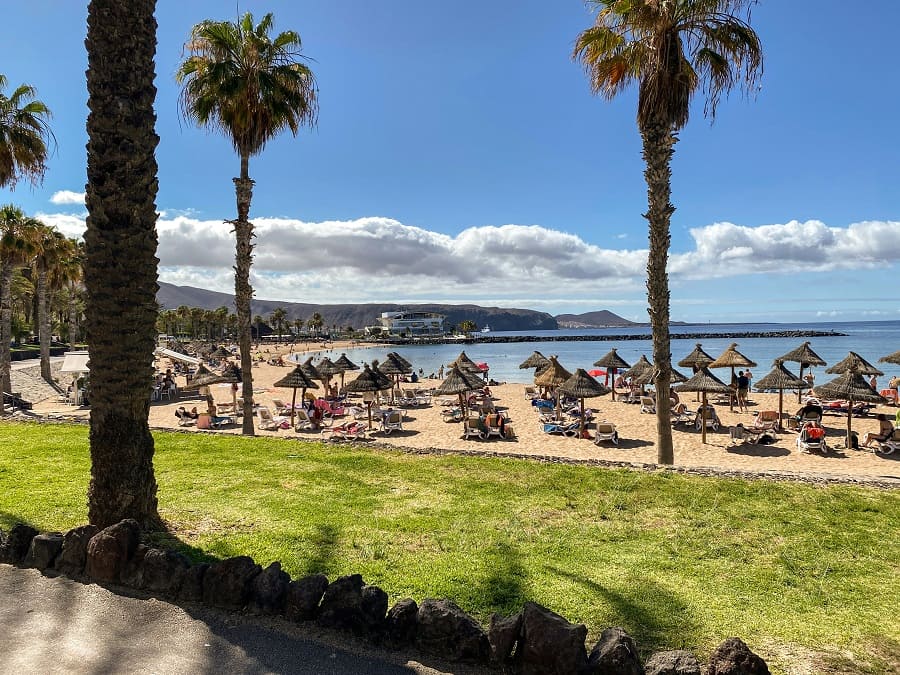
South Tenerife has more than a dozen beaches strung along the coast between Los Cristianos and La Caleta, and they are not all the same. The sand colour varies, the wave size varies, the sunbed prices vary considerably, and the kind of day you will have depends entirely on which one you pick. This guide covers the eight main beaches that most visitors actually want to know about, running from east to west along the promenade, plus a note on the quieter spots worth making the effort for.
Contents
- Playa de Los Cristianos: The Calmest Water on the South Coast
- Playa de Las Vistas: The Best All-Rounder
- Playa del Camisón: The Underrated One in Las Américas
- Playa de Troya: Dark Sand, Strong Sunsets
- Playa Torviscas and Playa Fañabé: The Family Stretch
- Playa de la Pinta: The Watersports Hub
- Playa del Duque: The Upmarket Option
- Playa de la Enramada: Volcanic Sand and Paragliders
- The Quieter Beaches Worth the Extra Effort
- A Word on Sand Colours and What They Mean
- Practical Tips
- Frequently Asked Questions
Playa de Los Cristianos: The Calmest Water on the South Coast
The harbour beach in Los Cristianos sits in a sheltered bay protected almost entirely by the harbour wall, which makes the water extraordinarily calm. There are barely any waves. For families with very young children or for anyone who wants to swim without any real effort, this is the beach to choose. The water is shallow for a long distance from shore and stays that way.
The backdrop is the working harbour with fishing boats, the Fred Olsen ferry coming and going to La Gomera, and the general activity of a town that has not been entirely rebuilt for tourism. Children who like boats tend to spend as much time watching the harbour as they do on the sand. The beach is smaller than Las Vistas next door and fills up faster in peak season, so arrive by 10am if you want a sunbed. The promenade restaurants immediately behind it are a good option for lunch without walking far.
The beach is also the departure point for guided kayak and snorkel tours along the Guaza coastline, where dolphin and turtle sightings are common. If you are planning a morning on the water before or after the beach, see our guide to the Los Cristianos kayak and snorkel tour.
Sunbed price: approximately €6 per bed per day. Facilities: lifeguards, showers, toilets, accessible access. Best for: toddlers, non-swimmers, anyone who wants maximum calm water.
Playa de Las Vistas: The Best All-Rounder
Playa de Las Vistas is the best general-purpose beach in the south of Tenerife. It is 850 metres long, Blue Flag awarded, has lifeguards, free showers, beach volleyball courts, accessible access, and sunbeds available throughout at around €12 for two beds and a parasol. The sand is golden and imported, noticeably lighter and finer than the darker volcanic sand on other beaches further west.
The water is calm thanks to breakwaters, safe for children and confident swimmers alike. It can get busy, and street vendors walking the length of the beach selling everything from sarongs to phone cases are a consistent irritant mentioned across years of reviews. That is the honest downside. Nothing about the beach itself is worth complaining about.
Las Vistas connects directly to the Los Cristianos promenade at the eastern end and to the Playa de las Américas strip at the western end, so it sits at the natural midpoint of the resort corridor. Most hotels in either resort are within walking distance of at least one end of it.
Sunbed price: approximately €12 for two sunbeds and a parasol. Facilities: lifeguards, free showers, toilets, beach volleyball, accessible access. Best for: families, first-time visitors, anyone wanting a full day with all facilities. Watch out for: persistent street vendors and it fills up quickly in July and August.
Playa del Camisón: The Underrated One in Las Américas
El Camisón sits at the southern end of Playa de las Américas and gets far less attention than the more central resort beaches, which is exactly why it is worth knowing about. The sand is lighter than Troya further north, the water is calm thanks to the protected inlet, and on a typical morning it is noticeably quieter than the main Las Américas strip.
The crescent shape gives it a more enclosed feel than the open run of Las Vistas. Sunbeds cost around €12 for two with a parasol, broadly similar to Las Vistas. The H10 Mediterranean Palace hotel sits directly above it. Good for a swim without crowds; less good as an all-day base for a larger group, since it does not have the sheer volume of facilities that Las Vistas provides. The promenade behind it has a solid range of restaurants and bars.
Sunbed price: approximately €12 for two sunbeds and a parasol. Facilities: lifeguards, showers, toilets, accessible access. Best for: anyone staying in the southern Las Américas hotels who wants a quieter alternative to the busier central beaches.
Playa de Troya: Dark Sand, Strong Sunsets
Troya is the most central beach in Playa de las Américas and one of the most recognisable on the south coast. The sand is darker volcanic sand here, fine-grained rather than gritty, but noticeably darker than Las Vistas or El Camisón. The beach runs for around 650 metres and is backed by the busy Las Américas promenade, with the Avenida Rafael Puig Lluvina and its bars, restaurants, and shops directly behind.
Because it faces almost directly west, the sunset from Troya is excellent. The beach is popular with water sports operators offering banana boats, jet skis, and parasailing. If you want activity, Troya delivers it. If you want peace, it does not. Pickpockets are occasionally mentioned in reviews for this stretch, so keep valuables in a bag rather than left on the sand.
Facilities: lifeguards, showers, toilets, watersports hire. Best for: couples and groups who want energy, entertainment, and easy access to bars and restaurants. Not for: anyone wanting a quiet day.
Playa Torviscas and Playa Fañabé: The Family Stretch
These two beaches run into each other with no real physical gap between them, separated only by a sign on the promenade. Together they form the main family beach area of Costa Adeje, and they are the beaches most commonly shown in Costa Adeje hotel marketing.
Fañabé is the larger of the two, running to around 600 metres with golden sand, breakwaters that keep the water calm, Blue Flag status, beach volleyball, children’s play areas on the promenade, and a wide range of restaurants and shops behind. It is where the Thursday and Saturday Fañabé market takes place on Avenida de Bruselas, a short walk from the beach. Sunbeds cost around €5 to €6 per bed.
Torviscas sits to the south, slightly smaller, with similar sand and facilities. Sunbed prices in what locals call the “yellow zone” drop to around €8 for two sunbeds and a parasol, versus €10 in the green zone closer to Fañabé. Accessible beach facilities for wheelchair users are available at Torviscas specifically, making it one of the better-equipped beaches on the south coast for visitors with mobility needs.
Sunbed prices: approximately €5 to €6 per single bed at Fañabé; €8 for two and a parasol at Torviscas yellow zone. Facilities: lifeguards, showers, toilets, beach volleyball, accessible bathing, children’s play areas on promenade. Best for: families, anyone staying in the main Costa Adeje hotel area, week-long beach holidays.
Playa de la Pinta: The Watersports Hub
La Pinta sits alongside Puerto Colón marina in the heart of Costa Adeje and is the primary hub for watersports in the south. Jet ski hire, scuba diving excursions, whale watching boats, kayak tours, parasailing, and most water-based activities you can book in the south depart from or alongside this beach. The sand is more golden than the northern Las Américas beaches, and the water is reasonably sheltered.
If you are spending a day here purely as a beach day, the activities on and around the water are the main draw rather than the beach itself. There is an inflatable water park anchored offshore that children can use for a fee. Plenty of restaurants and bars line the promenade behind it. For accessing the south’s watersports operators, this is the most convenient base of operations on the entire coast.
Facilities: lifeguards, showers, toilets, extensive watersports hire. Best for: anyone who wants to combine the beach with boat trips, jet skis, or any water activity. For whale watching and boat tour options departing from Puerto Colón, see our guide to whale watching in Tenerife. For jet skiing along this stretch of coast, see our jet ski guide for south Tenerife. And if the question of whether you can swim with whales and dolphins here has crossed your mind, see our honest answer to that one too.
Playa del Duque: The Upmarket Option
Playa del Duque is the most polished beach in south Tenerife and the most expensive for it. The sand is golden, the promenade is lined with upmarket restaurants, boutiques, and the Gran Hotel Bahía del Duque, and the beach itself is Blue Flag with sunbeds, lifeguards, showers, and accessible access. It is around 600 metres long, protected by rock formations that keep the water reliably calm.
Two sunbeds and a parasol cost approximately €19 to €20 here, nearly double the price at Las Vistas and considerably more than at Fañabé. The facilities justify some of that premium: the sunbeds are more comfortable, the beach is better maintained, and the promenade café and bar options are considerably better than the equivalent at the more commercial stretches. There is paid parking nearby, at the corner shopping plaza or Plaza del Duque at around €2 per hour.
The beach does have some choppier days, and a few reviewers mention that waves can build in the afternoon. It is not the calmest water on the coast. El Beril beach, a small volcanic sand cove directly adjacent to Playa del Duque, is worth walking to if you want to see the contrast between the imported golden sand and the natural black volcanic sand in one short visit.
Sunbed price: approximately €19 to €20 for two sunbeds and a parasol. Facilities: lifeguards, showers, toilets, accessible access. Parking nearby approximately €2 per hour. Best for: anyone staying in the Playa del Duque hotel area, couples wanting a quieter and more upmarket beach experience. Note: the upmarket restaurants on the promenade charge accordingly, especially the cafés adjacent to the beach.
Playa de la Enramada: Volcanic Sand and Paragliders
La Enramada sits on the boundary between Costa Adeje and La Caleta and is the only black volcanic sand beach in the main resort corridor worth specifically visiting. The sand is not gritty or unpleasant: it is dark, fine, and warm in a way that lighter imported sand is not. The beach is smaller than the main resort beaches, with a more natural feel, and the Coqueluche beach bar on the promenade above it is genuinely one of the better beach bars in the south.
What makes La Enramada specifically memorable is the paragliders. In the late afternoon, they come in over the Barranco del Inglés and land on the beach itself, right alongside sunbathers. It is unusual and quietly spectacular to watch, and it accounts for why the Coqueluche bar gets busy in the early evening. Bodyboarders also use this stretch when there is a swell. Sunbeds cost around €12 to €18 depending on position.
The beach is served by the coastal promenade from Costa Adeje, a pleasant walk heading west past Playa del Duque. From La Caleta village it is a ten-minute walk in the opposite direction.
Sunbed price: approximately €12 for one, €18 for two at the time of recent visitor reports. Best for: anyone wanting volcanic sand, sunset drinks, and something different from the main resort beaches. Getting there: walk west from Playa del Duque along the promenade, approximately 20 to 25 minutes from Fañabé. Taxi from Costa Adeje approximately €10.
The Quieter Beaches Worth the Extra Effort
Beyond the main resort beaches, three spots warrant a separate mention for anyone willing to make a small effort to reach them.
El Puertito is a tiny cove north of La Caleta with resident sea turtles that can often be seen snorkelling just off the beach. No sunbed hire, no resort infrastructure, a handful of local bars and restaurants. It is one of the genuinely special things in the south that most tourists never find. For more detail, see our hidden gems guide for south Tenerife.
Playa Diego Hernández sits between El Puertito and La Caleta, accessible only on foot along the coastal path. Small, natural, no facilities. The kind of beach that requires nothing of you except that you got up early enough and brought your own water.
Playa de Abama, near the Ritz-Carlton Abama resort roughly 20 minutes west of Costa Adeje, is a public beach with calm water and very few visitors. Access is via a path from the resort entrance. A hire car makes this considerably easier than a taxi for a day trip.
A Word on Sand Colours and What They Mean
Most visitors arrive expecting the white or cream sand typical of Mediterranean package holiday brochures. South Tenerife does not have that naturally. The volcanic geology produces dark, coarse black sand, and most of the resort beaches have been improved with imported sand from the Sahara desert, giving them the lighter golden or taupe colour. Las Vistas, Fañabé, El Camisón, and Playa del Duque all use imported sand. Playa de Troya and La Enramada are partly or entirely volcanic, hence the darker colouring.
Volcanic sand gets hotter in direct sun than lighter sand. Reef shoes or flip-flops for walking on it in the middle of the day are not excessive caution.
Practical Tips
Arrive before 10am for a sunbed in peak season. The popular beaches in July and August sell out their sunbed allocation by mid-morning. Arriving by 9am guarantees choice. Arriving at noon in August does not.
Sunbed prices vary significantly. Playa del Duque costs roughly double what Las Vistas charges for the same two sunbeds and a parasol. If budget is a factor, Las Vistas or El Camisón represent the best value among the well-facilitated beaches.
Watch your belongings at the busier beaches. Playa de Troya and Las Vistas both have histories of opportunistic theft in peak season. Do not leave a phone or wallet on the sand unattended. Waist pouches and zip-close bags are sensible at the main resort beaches.
The street vendors are persistent. They operate legally on the main resort beaches and will approach you regardless of whether you make eye contact. A firm “no gracias” and no further engagement is the most efficient response.
Free showers are available at most beaches. Las Vistas, Torviscas, Fañabé, and Playa del Duque all have free public showers. The quality varies but they are generally adequate. Paying sunbed operators usually have their own shower facilities as well.
Getting between beaches is easy on foot. The promenade connects Los Cristianos to La Caleta continuously along the seafront for approximately 10 kilometres, all flat and all well-surfaced. Walking the full length takes around 45 minutes to an hour at a comfortable pace and passes every beach in this guide. See our getting around south Tenerife without a car guide for buses and taxis between specific points.
Frequently Asked Questions
What is the best beach in south Tenerife?
Playa de Las Vistas in Los Cristianos is the best all-round beach: 850 metres long, Blue Flag, calm water, good facilities, and central location. Playa del Duque in Costa Adeje is the best if you want a more upmarket, polished experience and are willing to pay around €20 for sunbeds.
What is the best beach in Costa Adeje?
Playa Fañabé for families with children: Blue Flag, calm water, play areas, and good facilities. Playa del Duque for couples or visitors wanting a quieter, more refined beach. Playa de la Enramada for volcanic sand and a genuinely different atmosphere.
Are there any quiet beaches in south Tenerife?
El Puertito, Playa Diego Hernández, and Playa de Abama are all considerably quieter than the main resort beaches, though each requires some effort to reach. See our hidden gems guide for directions and what to expect at each.
Does south Tenerife have white sand beaches?
Not naturally. The volcanic geology produces dark sand. Most resort beaches use imported Saharan sand, which gives them a golden or light taupe colour. Playa de Las Vistas, Fañabé, Torviscas, El Camisón, and Playa del Duque all have lighter imported sand. Playa de Troya and La Enramada have natural darker volcanic sand.
What are sunbed prices like on south Tenerife beaches?
Approximately €12 for two sunbeds and a parasol at Las Vistas and El Camisón. Around €5 to €6 per single bed at Fañabé and Torviscas, or €8 to €10 for two. Around €19 to €20 at Playa del Duque. Prices are subject to change and vary within the same beach depending on position.
Which south Tenerife beach is best for young children?
Playa de Los Cristianos has the calmest water on the entire south coast, protected by the harbour wall. Playa Torviscas has specifically accessible bathing facilities for children with mobility needs. Playa de Las Vistas is good for older children and families who want more space and activity.
Can you walk between the beaches in south Tenerife?
Yes. A flat coastal promenade connects Los Cristianos to La Caleta in the west for approximately 10 kilometres, passing every beach in this guide. Walking the full length takes around 45 minutes to an hour.
Sunbed prices, facilities, and beach conditions are subject to change. Always verify current information on arrival. Blue Flag status is reviewed annually and may change.