You wake up and the sky is the colour of weak tea. Teide has vanished, there is a film of grit on the balcony table, and the sea looks angry. That is a calima, and it is the one bit of Tenerife weather nobody warns British visitors about.
The short version: it is Saharan dust blown over from Africa, it happens every year, most episodes are a mild annoyance rather than a holiday-ruiner, and the thing most likely to be affected is not your flight but your boat trip. Here is what actually happens, what gets cancelled, whether you need to worry about it, and what to do with the day instead.
Contents
- What a calima actually is
- When it happens and how long it lasts
- What gets cancelled: boats, flights and excursions
- The health side, honestly
- What to do on a calima day
- How to check before you write the day off
- Practical tips
- Frequently asked questions
What a calima actually is
Calima is simply the Spanish word for atmospheric haze. In the Canaries it means one thing: fine dust lifted off the Sahara by desert winds and carried west across the Atlantic, arriving here within a day or so of leaving Africa.
It is not sand. It is a dry aerosol of quartz and clay, sometimes carrying pollutants from North Africa, fine enough to hang in the air and get deep into your lungs. That is why the sky turns yellow-orange rather than just looking cloudy, why visibility drops, and why everything you own ends up with a thin coat of dust on it.
It usually arrives with heat. The same easterly winds that carry the dust bring hot, dry desert air with them, so a calima day is often noticeably warmer and drier than the days either side, even in winter. Temperatures in the south can jump several degrees while the rest of the island cools.
When it happens and how long it lasts
Tenerife sees somewhere in the region of 15 to 25 dust episodes a year, but most are so light you would not notice beyond a hazy horizon. The ones that genuinely affect a holiday happen only a couple of times a year, and plenty of visitors never see one at all.
The peak is January to March, when the trade winds weaken. If you are booking a winter sun trip, that is the window to be aware of. Episodes typically run three to five days, with the worst of it in the first day or two before it gradually clears. A mild one can pass in a matter of hours. A severe one can hang around for a week or more.
The south, where all the resorts are, tends to catch it worse than the green north, along with the high mountain areas around Teide. So Los Cristianos, Playa de las Américas and Costa Adeje are squarely in the firing line.
For scale: the March 2026 episode was the strongest of that year, driven by an Algerian sandstorm on a front around 1,000km wide, which pushed dust levels in south Tenerife to extreme readings and triggered warnings across all eight islands. That was an outlier, not a normal week.
What gets cancelled: boats, flights and excursions
This is the part most guides get the wrong way round. Everyone worries about their flight. In practice the boat trips go first.
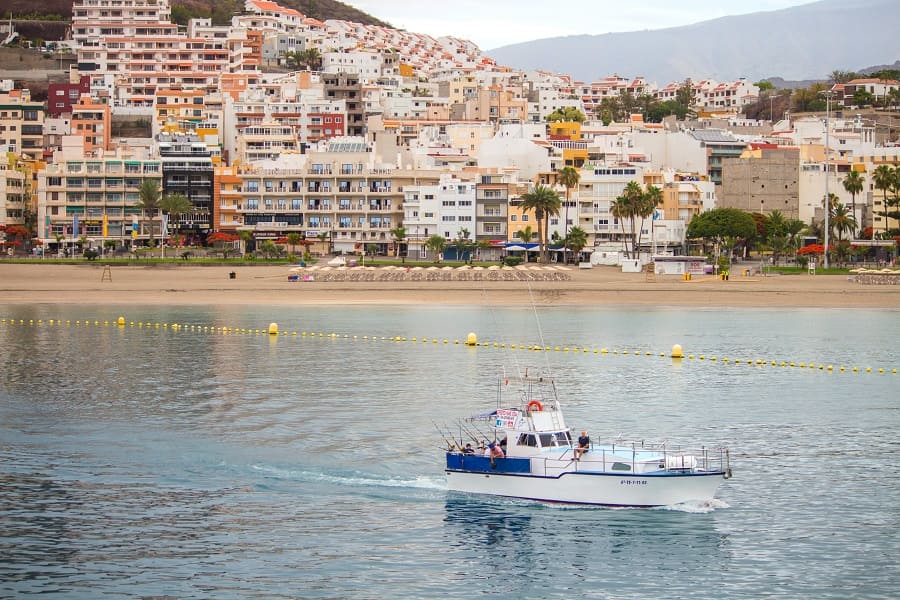
Boat trips and water sports. A calima usually rolls in with strong easterly winds, which churn up the sea. It is the wind and the swell, not the dust itself, that gets excursions cancelled. Whale watching, catamaran trips, kayaking, jet skis and diving are the first things to be pulled, and even when they run, the combination of rough water, heat and poor visibility makes seasickness far more likely. If a boat trip is the highlight of your week, do not leave it until the last day. Book early in your stay so you have room to rebook. Our guides to whale watching and the kayak and snorkel tour from Los Cristianos cover the operators, and most will rebook or refund if they cancel for weather. The same goes for jet ski hire and snorkelling, where murky water takes the point out of it anyway.
Flights. Only in the more serious episodes. When visibility drops below safe limits, planes can be delayed, diverted or grounded, and Tenerife North is usually hit harder than Tenerife South. In the March 2026 calima, some UK flights out of Birmingham, Manchester and East Midlands were diverted to Fuerteventura. That is the exception rather than the rule, and in most episodes the south airport carries on as normal. If your flight is disrupted, EU passenger rights rules still apply, so the airline should rebook you or refund you, and cover meals and a hotel if you are stuck overnight. Weather is usually treated as outside the airline’s control, so cash compensation on top is unlikely, but the duty of care remains. Our Tenerife South airport guide covers the basics of getting in and out.
Teide and the views. A calima wrecks exactly what you go up the mountain for. The haze kills the long views, and the summit sits in or above the dust layer depending on the episode. Stargazing is a write-off, since the dust scatters the light. If stargazing is on your list, keep it flexible and go on a clear night rather than a booked one.
Beaches. Nothing officially closes, but a calima day is a poor beach day. The haze takes the pleasure out of it, the heat can be oppressive, and windy stretches turn into a sandblasting. The dust also does not stop the UV, so you can still burn under a milky sky, which catches people out.
The health side, honestly
For most healthy adults, a mild to moderate calima is an irritation rather than a danger. Expect a scratchy throat, dry or itchy eyes, a bit of a cough, maybe a headache and less energy than usual. It passes when the dust does.
It is more serious for some people. Anyone with asthma, COPD or another respiratory condition, heart conditions, young children and the elderly are all more affected, and this is not a group to be casual about. Spanish health authorities issue standard guidance during episodes: keep windows and doors closed, avoid strenuous outdoor exercise, drink plenty of water, and wear a mask outside if you are in a sensitive group, with an FFP2 recommended during the stronger episodes. Pharmacies across the island stock masks and eye drops, and Spanish pharmacists are generally excellent at advising on this.
If you have a respiratory condition, bring your usual medication and do not assume you can pick up a replacement inhaler easily. If you feel genuinely unwell, 012 is the Canary Islands information line and 112 is the emergency number. None of this is medical advice, and if you have a health condition that concerns you, speak to your own doctor before you travel.
One practical note that matters more than people expect: skip the run or the outdoor gym session. Hard exercise means breathing more of the dust more deeply. If you were planning to use our running routes, take the day off or move it indoors to one of the air-conditioned gyms.
What to do on a calima day
Treat it like a rainy day at home. It is one day, usually two, and there is plenty to fill it with. Most of what works on a wet day works here, so our guide to what to do when it rains in Tenerife is the obvious companion piece.
The short list for a dusty day in the south: an indoor gym session, an indoor mini golf round or a game of padel, a long lunch somewhere good rather than a rushed beach snack, or a wander round the covered local markets. If you have children, our things to do with kids guide has the indoor options.
Honestly, a calima day is a decent excuse to do the thing you keep meaning to do and never get round to, which is eat properly. Book a table somewhere from our Los Cristianos restaurant guide, or if it lands on a Sunday, go and find a Sunday roast. If there is football on, our guide to where to watch the football will point you at an air-conditioned bar with the game on.
One upside worth knowing: a calima makes for spectacular sunsets. The dust scatters the light into deep reds and oranges that you simply do not get on a clear evening. If you are stuck with a hazy day, go and find a west-facing spot and get something out of it. Our guide to where to watch the sunset has the best spots.
How to check before you write the day off
AEMET, the Spanish state weather agency, is the official source and issues the alerts, which run from no warning through yellow to orange and red as conditions worsen. Yellow means dust is visible and sensitive groups should ease off outdoor exercise. Orange and red mean staying indoors with the windows shut and taking it seriously.
Beyond the official forecast, the quickest check when you are already here is simply to look at Teide. If you cannot see the mountain from the coast on what should be a clear day, the dust is in. Your excursion operator will also contact you if a boat trip is off, usually the evening before or the morning of, so keep your phone on and the booking confirmation to hand.
Practical tips
- Book boat trips early in your stay, not on the last day, so you have room to rebook if the sea is too rough.
- Keep windows and balcony doors shut. The dust gets into everything, and an open balcony door will coat the room.
- Wear sunglasses outside. Dust in the eyes is the most common complaint, and contact lens wearers suffer most, so pack glasses as a backup.
- You can still burn. The haze does not block the UV, so keep the sun cream on even when the sky looks milky.
- Drink more water than usual. The air is unusually dry and it dehydrates you faster.
- Skip the outdoor run or hike. Hard breathing means more dust, deeper.
- Bring your inhaler if you use one, and do not rely on picking one up out here.
- Hired a car? Expect it filthy. Do not pay for a valet before returning it, since a quick wash is all it needs and most hire firms accept dust as normal.
Frequently asked questions
What is a calima?
Fine dust blown from the Sahara across to the Canary Islands by easterly winds. It turns the sky hazy yellow-orange, drops visibility, raises the temperature and leaves a film of dust on everything.
When is calima season in Tenerife?
It can happen any month, but the peak is January to March. Episodes usually last three to five days, with the worst in the first day or two.
Will it cancel my flight?
Usually not. Only the stronger episodes affect flights, and Tenerife North is hit more often than Tenerife South. In serious cases flights can be delayed or diverted, and the airline must rebook or refund you and look after you if you are stranded overnight.
Will my boat trip be cancelled?
This is the likeliest casualty. Calima usually brings strong winds and rough seas, so whale watching, catamarans, kayaking and jet skis are often pulled. Book early in your holiday so you have time to rebook.
Is calima dangerous?
For most healthy adults it is an irritation, causing a dry throat, itchy eyes and tiredness. It is more of a concern for people with asthma or other respiratory conditions, heart conditions, young children and the elderly, who should follow the official advice to stay indoors, keep windows shut and wear a mask outside during stronger episodes.
Can I still go to the beach?
Nothing closes, but it is not much fun. The heat is heavier, the haze spoils the view, and you can still burn through the dust. Most people are better off finding something indoors.
How can I tell if a calima is coming?
Check AEMET, the Spanish weather agency, for official alerts. Once you are here, the simplest test is whether you can see Teide from the coast. If the mountain has disappeared on an otherwise clear day, the dust has arrived.
This is general information, not medical advice. If you have a respiratory or heart condition, speak to your own doctor before travelling. Conditions, alerts and cancellation policies change, so always check AEMET and directly with your airline or excursion operator for the latest.