
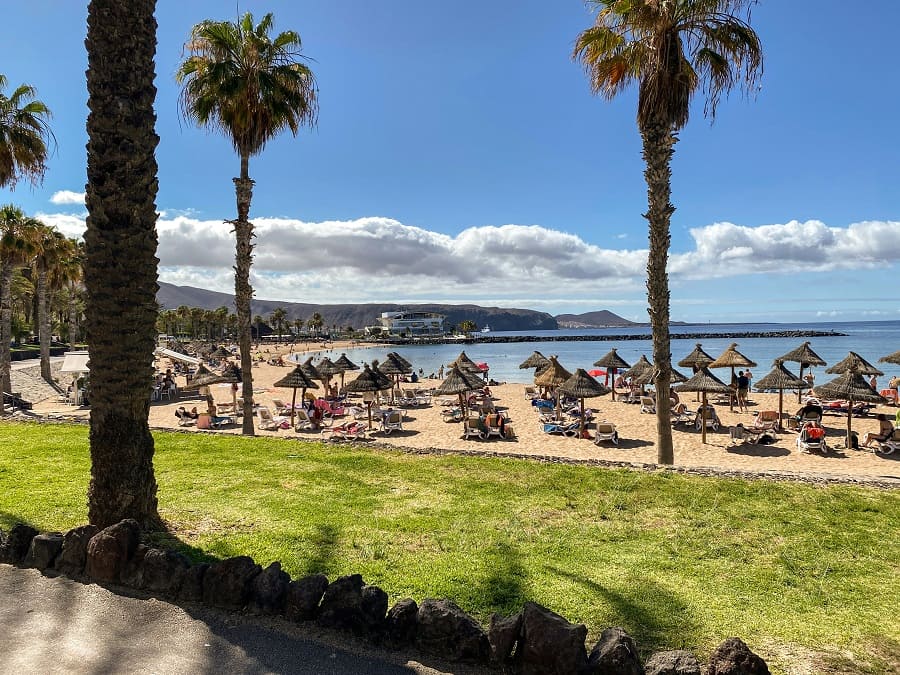
Autumn is the south of Tenerife’s quiet secret. Through October and November the sea is still warm enough to swim, the crowds thin out, the prices drop, and the summer heat softens into something you can actually walk in. There is one honest caveat, which is that this is the island’s wetter stretch. But the detail the weather apps bury is that the rain mostly falls on the north. Stay in the south and you are very likely to get the warm, dry, half-empty shoulder-season holiday that regulars quietly book every year.
This guide covers what autumn in south Tenerife is actually like: the weather told straight, whether you can still swim, what is on through October and November, and how to plan around the one real risk. If you are mid-decision on a shoulder-season trip, the short version is that it is one of the best-value times to come, as long as you understand the north-south split.
Contents
- Why autumn is a smart time to visit
- The weather, honestly
- Can you still swim? Sea temperature and watersports
- What’s on: autumn events in the south
- Stargazing and the Orionids on Teide
- The best things to do in autumn
- What to pack
- Practical tips
- Frequently asked questions
Why autumn is a smart time to visit
Three things line up in autumn that rarely line up together. The crowds drop off once the school holidays end, so the beaches, the restaurants and the attractions are noticeably quieter than in July and August. Prices follow the crowds down, so flights and hotels in October and November are among the cheapest of the year outside the deep winter. And the temperature settles into the range most people actually find comfortable, warm rather than baking.
That last point matters more than it sounds. High summer in the south can be genuinely hot, which makes anything active hard work. In autumn the heat eases to daytime averages in the low to mid twenties, which is close to perfect for walking, exploring and being outside all day rather than hiding from the sun by noon. If you have ever wanted to do the coastal walks or head up into the hills, this is the season for it. Our guide to the running routes in south Tenerife works just as well for walkers looking for the flatter coastal options.
The weather, honestly
Here is the fact that decides an autumn trip, and the one the weather aggregators skate over. Tenerife has two climates. The trade winds pile cloud and rain against the mountains in the north, while the south sits in the rain shadow and stays dry and sunny. In autumn that split is at its most useful to you.
In October the south coast averages around 24°C, with highs near 27°C, roughly ten hours of sunshine a day, and only about 13 to 15mm of rain spread across two to four days in the whole month. November cools slightly to averages around 22°C, highs of 23 to 25°C, and about nine hours of sunshine. The telling comparison is the rainfall: Costa Adeje in November sees roughly 20mm over two or three days, while Puerto de la Cruz in the north gets around 60mm over six or seven. Same island, same month, three times the rain in the north.
Now the honest part the salesy pages leave out. October is statistically one of the wetter months on the island, and the chance of rain climbs through November towards December. What that means in practice is not a washout, but the odd heavy shower, sometimes a dramatic one, rather than day after day of grey. The realistic picture for a week in the south is mostly warm sunshine with perhaps a wet afternoon or a night-time downpour. If a shower does land, it tends to pass, and you plan around it rather than lose the day. Our guide to what to do when it rains in Tenerife covers the indoor options for exactly those afternoons.
The tactic regulars use is simple: chase the sun by coast. If your day in the south looks cloudy, the north and the mountains are a different world, and vice versa, so on a rare grey morning in Los Cristianos you can drive 40 minutes and often find sunshine. Autumn is also the tail of the calima season, when Saharan dust can haze the sky, so it is worth knowing what that looks like. Our calima guide explains it.
Can you still swim? Sea temperature and watersports
Yes, comfortably. This is the reassuring bit for anyone worried that autumn means a cold sea. The Atlantic holds its summer warmth well into the year, so the water off the south coast sits around 23°C in October and about 22°C in November, which is warmer than most of the Mediterranean in high summer and perfectly swimmable without a wetsuit for most people.
That means the beaches and the water are still very much in play. Snorkelling is at its best in the calm, clear autumn water, and the boat trips keep running. Whale and dolphin watching operates year-round off this coast and autumn is a fine time for it, with the resident pilot whales and dolphins present whatever the season. See our guides to the best snorkelling spots and to whale watching for the details. The beaches themselves are quieter now too, so the ones that fill by mid-morning in August have space in October, as our beaches guide covers.
What’s on: autumn events in the south
Autumn is quietly one of the better times for local events, because this is when the south does its food and wine season rather than its beach-party season. Dates shift each year, so confirm before you travel, but the calendar reliably includes a handful worth planning around.
November is gastronomy month in Adeje, when the Adeje Tapas Route runs and dozens of restaurants put on special tapas at low fixed prices, which is a cheap and enjoyable way to eat your way around the area. Los Cristianos holds its Wine Festival in November too, a local celebration of Canarian wine and food. Over in the capital, the Tricontinental Craft Fair in Santa Cruz in late October brings together artisans from three continents, and it is an easy day trip.
The most unusual one is worth the drive. At the end of November, Icod de los Vinos in the north holds Las Tablas de San Andrés, a tradition dating back to the 1500s in which locals sled down the steep town streets on wooden boards, tied to the new wine of the season. It is loud, local and unlike anything in the resorts. For the food side of a trip closer to home, our guides to the best restaurants in Los Cristianos and the south Tenerife markets point you at where to eat and browse.
Stargazing and the Orionids on Teide
Autumn adds a reason to head up the mountain after dark. Teide sits under one of the darkest skies in the world, and on the night of 21 to 22 October the Orionid meteor shower peaks, sending fast, bright meteors across a sky that up here has almost no light pollution to spoil it. It is one of the better annual showers, and the timing lands right in the shoulder season.
Even outside the meteor peak, the clear, stable autumn air makes for excellent stargazing generally. If you are visiting in late October, timing an evening on Teide around the Orionids is the kind of thing you will remember longer than another day on the beach. Our stargazing guide covers how to do it, and our full guide to Mount Teide covers the mountain by day and night, including how cold it gets up there after dark.
The best things to do in autumn
The season shapes what is worth doing. The cooler daytime temperatures make this the best time of year for anything active, so the walking and hiking that would be punishing in August become genuinely pleasant. The volcanic trails and coastal paths are at their most comfortable, and the light in autumn is soft and good for photographs.
The water is still warm, so the snorkelling, the boat trips and the whale watching all stay on the table, with the bonus of thinner crowds and easier bookings. The quieter resorts mean you can walk into restaurants that need booking weeks ahead in summer. And the food-and-wine events give the season a character the beach months do not have. In short, autumn suits a slightly more active, more local kind of trip than a pure sunbathing week, which is exactly why it rewards people who want to see the island rather than just lie on it.
What to pack
Pack mostly for summer, with a couple of additions for the season. Daytime is still shorts-and-swimwear weather, so the beach kit comes as normal, and the sun is strong enough that sun cream and a hat matter as much as in July.
The additions are for the evenings and the odd shower. Evenings cool down more than in high summer, so a light jumper or a jacket is worth having, especially November nights. A light waterproof or a packable rain layer is sensible given the season, more for a passing shower than steady rain. And if you are heading up Teide, whether for the stargazing or the day trip, take proper warm layers, because it can be near freezing at altitude even when the coast is warm. Our full south Tenerife packing guide covers the lot, including what is cheaper to buy once you land.
Practical tips
- Stay in the south for the driest weather. The north takes most of the autumn rain, so base yourself in the Los Cristianos, Las Américas or Costa Adeje area.
- Chase the sun by coast. If your side looks grey, the other side of the island is often sunny, and it is only 40 minutes away.
- Book flights and hotels now if you are deciding, since autumn is shoulder-season pricing and the value is best before the Christmas rates kick in.
- Don’t be put off by “October is a wet month” headlines. In the south that usually means the odd shower, not a washout, so pack a light rain layer and carry on.
- Confirm event dates before you travel, as the tapas route, wine festival and San Andrés move each year.
- Time a late-October trip around the Orionid meteor shower on the night of 21 to 22 October for the stargazing.
- Take warm layers for Teide whatever the coast is doing, and a light jumper for the evenings generally.
Frequently asked questions
Does it rain a lot in Tenerife in October and November?
It is the island’s wetter season, but the rain falls mostly on the north. The south coast stays largely dry, with Costa Adeje seeing only around 20mm over two or three days in November against roughly 60mm in the north. Expect mostly sunshine in the south with the occasional passing shower.
Is the sea warm enough to swim in autumn?
Yes. The sea off the south coast is around 23°C in October and 22°C in November, warmer than much of the Mediterranean in summer and comfortable for swimming without a wetsuit for most people.
Is Tenerife too quiet in autumn?
It is quieter than summer, not dead. The resorts, restaurants and attractions are all open and running, just with fewer crowds and easier bookings. If anything the calmer pace is part of the appeal.
Which coast should I stay on in autumn?
The south, for the driest and sunniest weather. The northern resorts like Puerto de la Cruz are greener and lovely but take far more of the autumn rain.
Is Teide open in autumn?
Yes, the cable car and the national park run year-round, weather permitting. Autumn is a good time to go, and late October adds the Orionid meteor shower for stargazing. Take warm clothing, as it is much colder at altitude than on the coast.
What is the best month, October or November?
October is warmer, with a slightly warmer sea and more sunshine, but is statistically one of the wetter months. November is a touch cooler and the rain risk rises towards December, but it has the best of the food-and-wine events. Both are good. October edges it for pure beach weather.
Weather figures are seasonal averages and the real thing varies year to year, so always check the current forecast before you travel. Event dates change annually and should be confirmed with official sources. The north-south weather split is reliable but not absolute.